9/11, Anwar Al-Awlaki, Unanswered Questions and Why Some Answers Remain Hidden
09/15/2026 / By Morgan S. Verity
Anwar Nasser Abdulla al-Awlaki, a U.S.-born cleric later designated by the Treasury Department as a leader of al-Qaeda in the Arabian Peninsula, was killed by a drone strike in Yemen in 2011, according to U.S. officials. The strike made him the first American citizen known to have been targeted and killed by his own government without trial.
FBI documents and the 2004 9/11 Commission Report described contacts between al-Awlaki and hijackers Nawaf al-Hazmi and Khalid al-Mihdhar, according to those records. Questions about intelligence failures and foreign alliances have persisted, according to 9/11 families’ lawsuits and subsequent government releases.
This account relies on USAID records, FBI documents, the 9/11 Commission Report, Treasury statements, court filings and published interviews. A Libertarian Institute article published by ZeroHedge in September 2026 assembled much of that record ahead of the 25th anniversary of the attacks [1].
Early U.S. Ties and 2000 Return
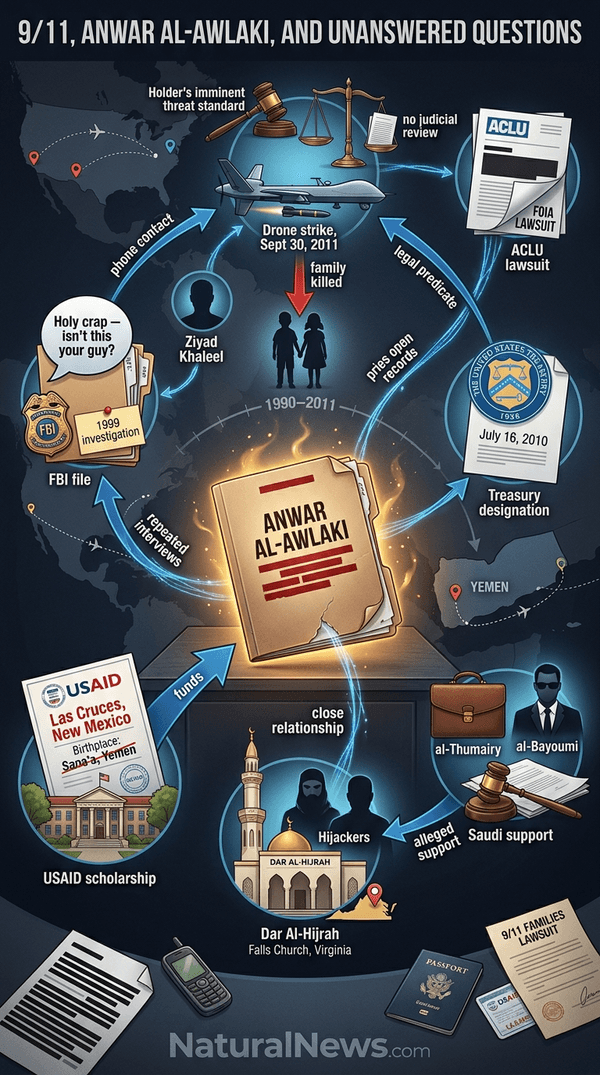
In 1990, the U.S. Agency for International Development provided full funding for al-Awlaki to study civil engineering at Colorado State University, according to a USAID document. The document listed his birthplace as Sana’a, Yemen, though he was born in Las Cruces, New Mexico, according to federal agent Ray Fournier and The New York Times. Fournier and the Times described the inaccurate birthplace as an attempt to qualify for scholarship money [1].
Al-Awlaki returned to the United States on Oct. 23, 2000, about two weeks after the bombing of the USS Cole in Yemen, according to the same account. At that time, the FBI did not establish a connection between him and the attack, the account stated. Months before Sept. 11, 2001, he moved to Virginia and became imam at the Dar Al-Hijrah Mosque in Falls Church [1]. Judicial Watch later obtained more than five thousand pages of records concerning al-Awlaki, an American citizen and militant imam of the Dar al-Hijrah mosque in Falls Church, Virginia, according to Tom Fitton’s book Clean House [2].
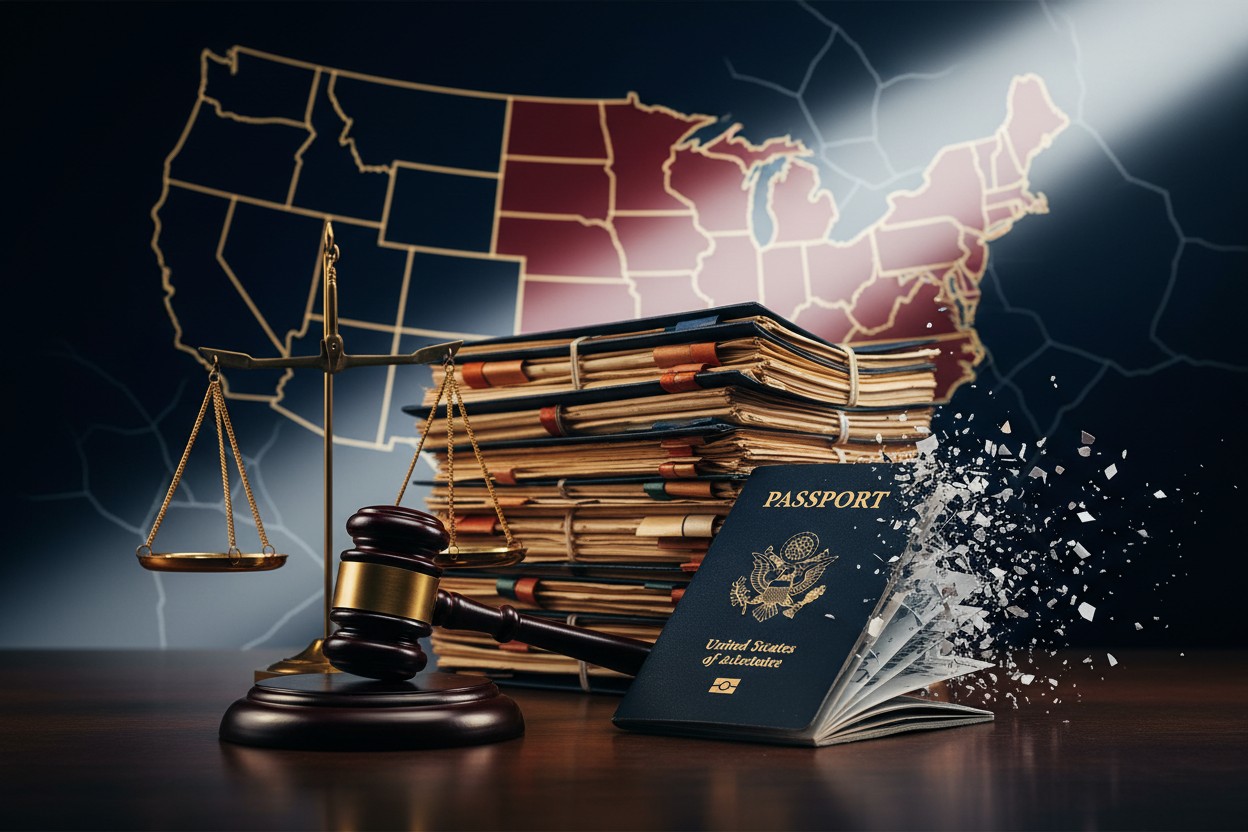
On Sept. 15, 2001, authorities questioned him, according to the account. He said he flew into Washington National Airport at 9 a.m., less than an hour before the Pentagon was hit, and he declined to show his passport, left for what he described as an urgent phone call and declined to comment on jihad, the account stated [1]. He was eventually killed by a Hellfire missile strike in Yemen fired from a Predator drone on September 30, 2011, according to Fitton [2].
FBI Contact and 9/11 Commission Findings
In 2003, al-Awlaki initiated contact with the FBI, saying he was astonished by some of the talk circulating in the media and wanted to clarify allegations that he was a spiritual advisor to the hijackers, according to the correspondence. An FBI agent wrote upon receiving the correspondence, Holy crap – isn’t this your guy? according to the account. A proposed meeting in London did not occur after al-Awlaki stopped replying [1].
The 2004 9/11 Commission Report stated that hijackers Hazmi and Mihdhar developed a close relationship with al-Awlaki, according to the report. An April 4, 2016, FBI Encore investigation update cited phone contact between al-Awlaki and Ziyad Khaleel, an alleged equipment procurer for Osama bin Laden. That connection led the FBI to open an investigation into al-Awlaki in 1999, according to the update [1].
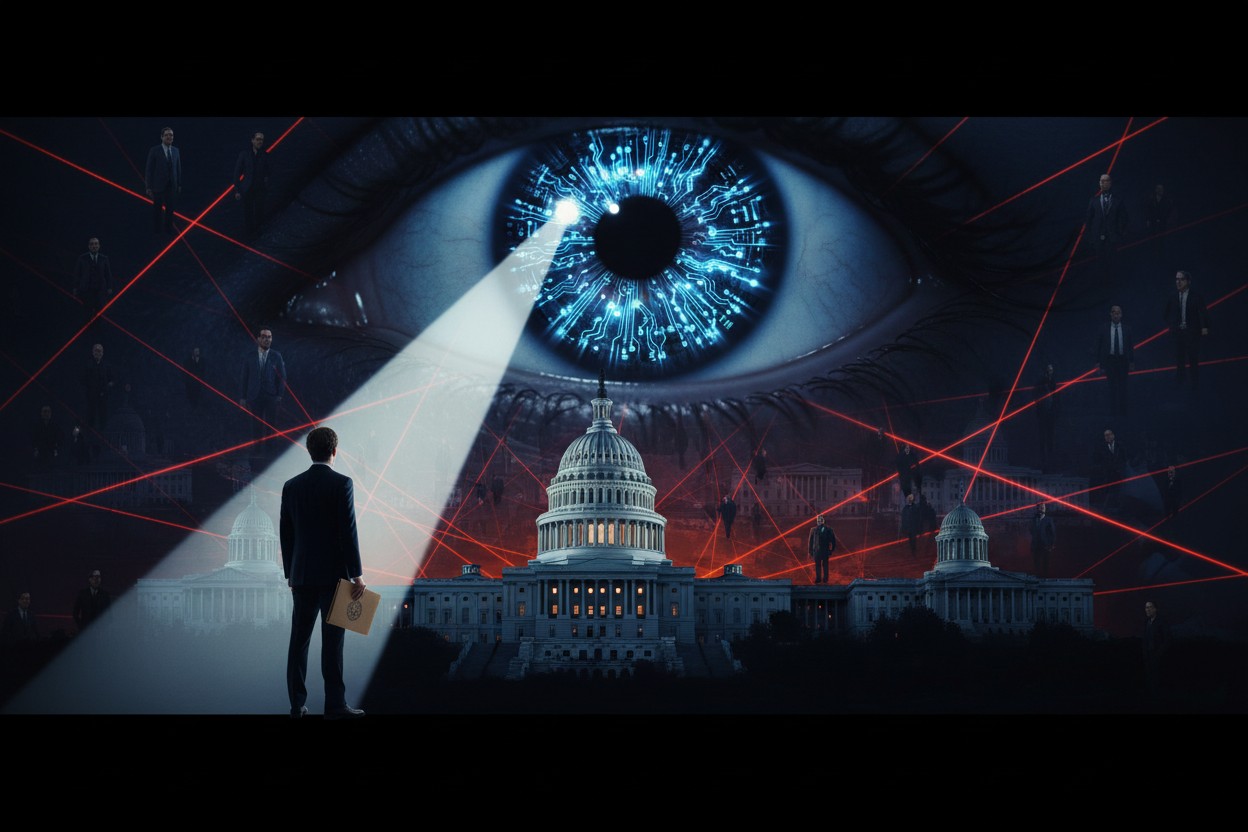
The pattern of overlapping relationships has drawn scrutiny of the bureau’s counterterrorism record. Critics have argued the FBI and the U.S. intelligence community fabricated terrorist plots and then thwarted them before they took place, a practice allegedly done as a means of further empowering the surveillance state and increasing the power of the federal government, according to NaturalNews.com [3]. In a separate account, NaturalNews.com reported that al Qaeda lost many of its members to drone strikes and defections to the Islamic State of Iraq and Syria, even as the organization continued to threaten American interests [4].
Later Designation, Attacks and Civil Lawsuit Claims
On July 16, 2010, the U.S. Treasury identified al-Awlaki as a key leader of al-Qaeda in the Arabian Peninsula with an operational role, according to the Treasury. Officials linked him to Umar Farouk Abdulmutallab’s 2009 Christmas Day attempt, messages with Nidal Hasan before the 2009 Fort Hood shooting and Faisal Shahzad’s 2010 Times Square attempt, according to the account [1].
Al-Awlaki was killed by a drone strike in Yemen in 2011. Weeks later his 16-year-old son was killed by a drone strike, and his daughter was killed in a raid more than five years later, according to reports [1]. Remarks by then-Attorney General Eric Holder at Northwestern University School of Law in Chicago stated that the U.S. Constitution does not protect Americans who may be planning terrorist attacks against other Americans, and that anyone deemed to pose an imminent threat and who could not otherwise be reasonably captured could face lethal force, according to accounts of the speech [5][6]. The American Civil Liberties Union filed suit against the Obama administration to obtain details of the targeted-killing program, according to NaturalNews.com [7].
In a 2015 civil lawsuit by 9/11 families against the Saudi Arabian government, a witness said he saw Hazmi and Mihdhar at a second-floor guest room at al-Awlaki’s San Diego mosque and that al-Awlaki held closed-door meetings with them, according to the court filings. A 2021 Operation Encore release said Saudi diplomat Fahad al-Thumairy directed an associate to look after two very significant people, later identified as Hazmi and Mihdhar, and Omar al-Bayoumi, who supported both men, was later identified as a Saudi intelligence agent, according to the releases and court filings [1].
Conclusion
The U.S. government had years of warnings, connections and unanswered questions before and after 9/11, according to the record assembled in the cited accounts. The 9/11 Commission’s findings, FBI Encore updates and civil litigation each added details without producing a complete public account of who knew what, and when [1][2].
As the 25th anniversary approaches, questions remain about intelligence failures, foreign alliances and the consequences of intervention, according to the article. The question al-Awlaki leaves behind is why so many warning signs were missed, and why some answers remain hidden [1]. No final determination on all outstanding questions has been announced by U.S. officials, according to public statements. The U.S. government’s claimed authority to kill Americans without legal review, as laid out by former Attorney General Eric Holder, remains a matter of continuing public dispute [5][6].
References
- Patrick Pillow. “9/11, Anwar Al-Awlaki, And Our Unanswered Questions”. ZeroHedge. September 12, 2026.
- Tom Fitton. “Clean House – Exposing Our Governments Secrets and Lies”.
- NaturalNews.com. “FBI halts terror plot dreamed up by the FBI then claims victory against terrorism”. NaturalNews.com. December 10, 2015.
- NaturalNews.com. “These top US billionaires have just been targeted by al Qaeda”. NaturalNews.com. September 11, 2015.
- NaturalNews.com. “US Attorney General Eric Holder confirms government has right to murder US citizens anywhere anytime without leg”. NaturalNews.com. October 27, 2015.
- NaturalNews.com. “US Attorney General Eric Holder confirms gove”. NaturalNews.com. March 08, 2012.
- NaturalNews.com. “ACLU sues Obama over drone killings of U.S. c”. NaturalNews.com. February 05, 2012.
Explainer Infographic
Submit a correction >>
Tagged Under:
9/11, al Qaeda, Anwar Nasser Abdulla al-Awlaki, big government, conspiracy, deception, domestic terrorism, extremism, FBI, Middle East, national security, real history, real investigations, Saudi Arabia, Suppressed, terrorism, truth, Unexplained
This article may contain statements that reflect the opinion of the author
RECENT NEWS & ARTICLES